The real hunting style of a crocodile
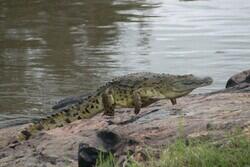
Photo. A hungry crocodile rose up from a river in Tanzania. Impatient. It couldn`t wait any longer for "free snacks." © Travel Explorations.
Crocodiles are found widely across the African continent, with Tanzania holding about half the of its population. Major populations are found in Kenya (Lake Turkana), Tanzania, Uganda, Zambia, Zimbabwe, Botswana, Mozambique, and South Africa. They can grow up to 5-6 metres long. That’s less “reptile” and more “ancient ambush machine.
Despite their fierce reputation, Nile crocodiles sometimes “babysit” their young in their mouths. It looks terrifying, but it’s actually one of the safest places a baby croc can be. Not exactly the kind of daycare you’d sign up for, but it works.
Whether is breakfast, lunch or dinner, Nile crocodiles are the ultimate opportunists. If the "food" moves and fits the menu, it’s fair game. As apex predators, they don’t specialize, they adapt: eating fish, birds, reptiles, mammals and everything else they can find for food. They’re not picky eaters, just very confident ones.
The Saltwater and Nile crocodiles are the most dangerous, killing hundreds of people each year in Africa. Don`t be fooled by the crocodile`s smile. A crocodile can look calm, even friendly, like it’s just chilling in the sun, and with a big smile.
Be aware that crocodiles don’t smile the way we do. That curved line of teeth isn’t emotion, but design. It gives a perfect poker face. A crocodile’s smile is not a welcome, it’s a warning. A smile that says: “I’m not happy to see you, but I might still see you as dinner.” Next time you’re near a calm river in Africa, just remember: if the log blinks, you’re in the wrong place.
Stein Morten Lund, May 2026
Additional information
The Nile crocodile (Crocodylus niloticus) is one of Africa’s oldest survivors, gliding through rivers, lakes, and swamps across 26 countries. From the winding Nile to the vast waters of Lake Turkana in Kenya, it has adapted to nearly every freshwater corner of sub-Saharan Africa. Quiet, patient, and powerful, it reminds us that strength doesn’t always need noise. A creature this ancient doesn’t rush. It waits, watches, and survives. There’s something to learn in that. Read more about crocodiles in Africa on Wikipedia.
The African dwarf crocodile, the shy introvert of the croc world. They live in West and Central African forests. It’s smaller, quieter, and prefers sneaking around at night. Read more about the dwarf crocodile on Wikipedia.







 E-mail this
 Print this