San Ignacio Mission, Argentina
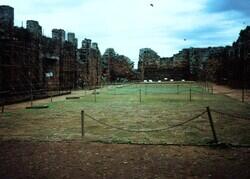
Photo. Where stone remembers faith - Walking in the footsteps of the Jesuits and the Guaraní in the ruins at San Ignacio.
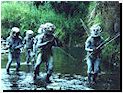
It was a site where worlds met - Jesuits in Black Robes and Indians with minimal clothing. Now a mission lost in time. Even though the ruins still speak. Standing among the ruins today, it becomes easier to imagine not just how they lived, but how intensely human life was here, fragile and meaningful, deep in the heart of the jungle.
The day began in the lush green world around Puerto Iguazú, where the air feels alive and history lies just beneath the surface. Long before the roar of Iguazú Falls fills my senses, this region whispers old stories of faith, ambition, and fragile encounters between worlds.
First, I visited the Iguazu Falls. It was early in the morning when the sunlight catches the spray. Inspired by the film The Mission from 1986, my visit to Iguazú Falls in Argentina in 1993 became more than a journey into dramatic nature - it felt like stepping into history, following the footsteps of Jesuit missionaries and the Guaraní people who once lived and struggled in this region.
It was especially the opening scene of The Mission which inspired me to go there, but I can assure you, Iguazú Falls are even more impressive in real life. No camera or soundtrack can fully capture the sheer power, scale, and emotion of standing there, feeling the ground tremble beneath your feet as the water crashes into the abyss.
Nestled in the far northeast of Argentina, Iguazú Falls felt overwhelming from the very first moment. This vast system of waterfalls stretches for kilometers, with the dramatic Devil’s Throat roaring at its heart.
Walking through Iguazú National Park, I was completely surrounded by lush subtropical rainforest. Every step along the wooden walkways revealed a new perspective - sometimes a wide panorama, sometimes a sudden drop where water thundered just meters away. The air was heavy with mist, the sound constant and hypnotic, a reminder of nature’s raw power.
Whether standing at a viewpoint or just walking around, the experience was intense, humbling, and unforgettable, a place where nature fully takes the lead.
My journey led me further to the San Ignacio Mission, a quiet yet powerful place built in the 17th century by Jesuit missionaries: it was during the era of Spanish expansion. Walking among the red-stone ruins, I felt the weight of time.
There, the Jesuits attempted to spread Christianity while organising Indigenous communities around faith, education, and work. The ruins, long hidden by jungle, were rediscovered in 1897 and carefully restored between 1940 and 1948, allowing their story to be told once more.
In The Mission (1986), the Jesuit priests - dressed in their simple black robes - establish a mission among the Guaraní, an Indigenous people native to what is now Argentina, Paraguay, Brazil, and Bolivia. Set in 18th-century South America, the film explores themes of faith, redemption, and moral courage, leading to a haunting question: Should faith be defended through peaceful resistance, or through armed struggle?
Standing near Iguazú, with the roar of the falls in the distance and the silence of the ruins nearby, the story felt intensely real.
Sites like San Ignacio remain powerful reminders of this complex chapter in South American history. The dramatic landscape around here connects film and history, showing that behind every great natural wonder lie human stories of belief, conflict, and hope (ref. the dramatic openings scene and end in the movie Mission from 1986).
Stein Morten Lund,
14th December 2025







 E-mail this
 Print this